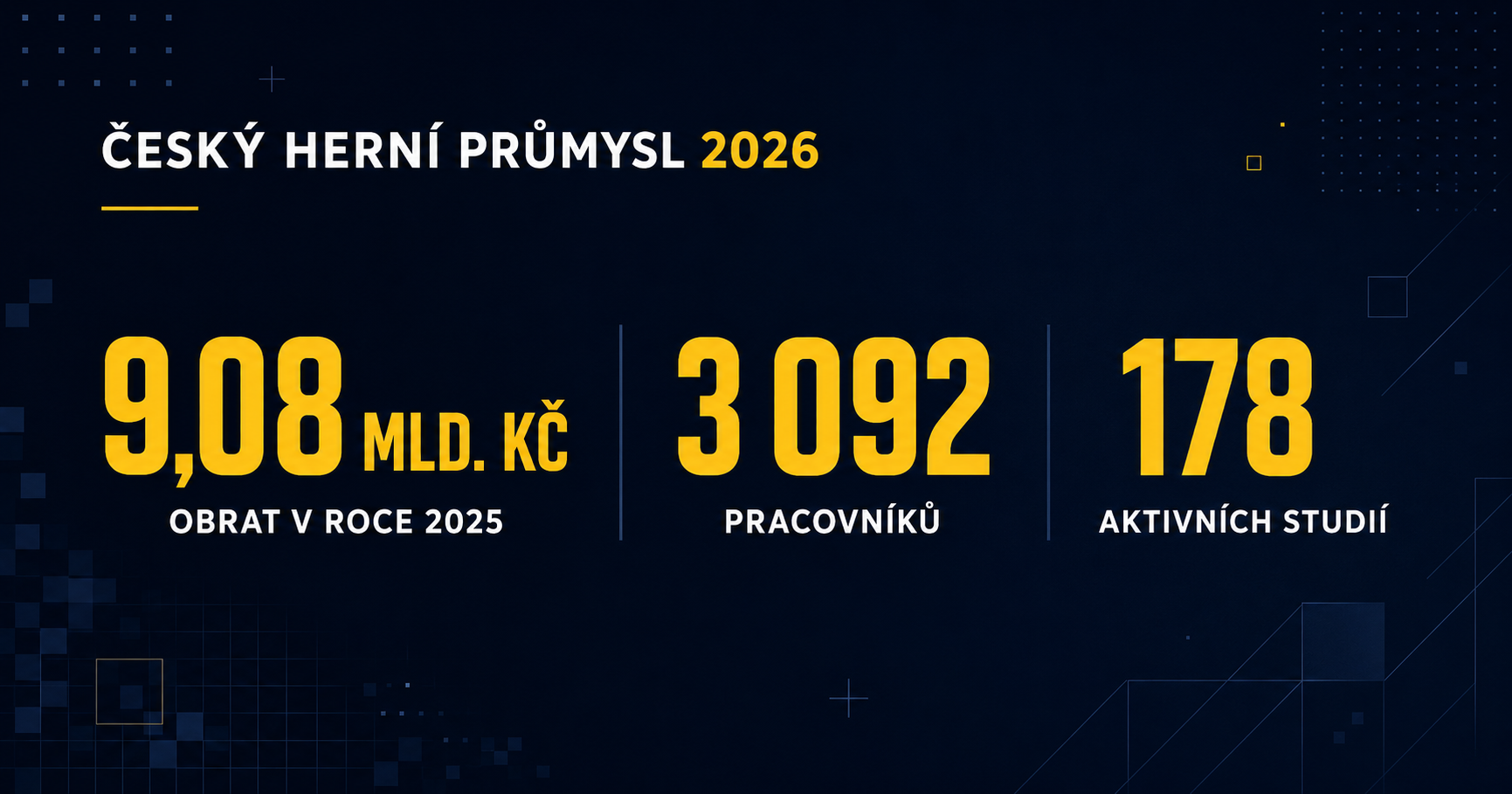
The Czech Game Developers Association (GDACZ), a member of the European Games Developer Federation (EGDF), recognises the European Citizens’ Initiative “Stop Destroying Videogames” — originally known through the “Stop Killing Games” campaign — as a legitimate expression of concern from the gaming community, supported by more than 1.29 million verified signatures.
We share the initiative’s basic premise: players, as customers, deserve protection and fair treatment. We believe it is right that players should know clearly and in advance when a game depends on an online service, and that they should not be misled about the nature of their purchase.
At the same time, as representatives of game developers — the very stakeholders who would be directly affected by any regulation resulting from this initiative — we must point out the serious risks associated with the proposed obligations.
What we support
- Transparency towards players.
Games that depend on an online service should be clearly labelled as such before purchase, including information that the operation of such a service is not guaranteed indefinitely. We agree with the initiative that players should not be surprised by what they have actually bought. - Offline modes where technically and economically feasible.
We encourage developers and publishers to offer offline modes where possible, and to design games in a way that ensures the end of online support does not automatically render them completely unplayable. - Voluntary, market-driven practices.
Fair information, responsible communication and long-term care for the community are in the best interest of studios themselves.
On the specific demands of the initiative
1. “An obligation to leave the game in a functional, playable state” — not enforceable as a blanket rule
The initiative calls for publishers selling or licensing games in the EU to be required to leave them in a playable state. In practice, however, the end of support for a game often means that the entity against which such an obligation would be enforced no longer exists or no longer has the resources to comply.
Games also depend on hardware, operating systems and console platforms. Even with the best intentions, developers cannot guarantee permanent functionality. In addition, the requirement also refers to “associated features and assets”, such as microtransactions or in-game items, which dramatically broadens the range of affected products and increases the technical complexity of compliance.
2. “A ban on remote disabling until the publisher provides reasonable means for the game to function without its involvement” — an obligation imposed at the moment of zero incentive
This requirement effectively introduces a mandatory end-of-life plan. However, it imposes the obligation precisely at the moment when the project no longer generates revenue and the publisher has no economic incentive to fulfil it — and often no remaining team capable of doing so.
Such a legal obligation could also be easily circumvented by transferring the game to another entity. The result would be regulation that burdens responsible developers while failing to stop those it is aimed at.
Creating “reasonable means” for a game to function without the publisher — such as an offline patch or the release of server-side components — is technically and legally extremely demanding for online games. It may involve licensed middleware, third-party rights, security, anti-cheat systems and platform requirements.
3. “The initiative does not demand ownership, rights or source code after support ends” — this restraint is only appare
We appreciate that the initiative does not explicitly demand the release of intellectual property, source code or the indefinite operation of servers.
However, the “reasonable means” for a game to function without the publisher would still need to be created before support ends. The cost therefore does not disappear; it is merely shifted elsewhere.
For games designed as online services, fulfilling such a requirement could mean developing the product twice: once as a live service and once as an offline replacement. For large publishers, this may be manageable. For small and medium-sized studios, it could be a devastating burden.
4. Supremacy over licence agreements — an intervention into contractual freedom
The initiative calls for any adopted measures to override licence agreements. We understand the motivation: protecting consumers from one-sided terms and conditions.
However, a blanket override of contractual relationships in a dynamic technological industry would be a step with difficult-to-predict consequences and should be approached with extreme caution.
What we warn against
Developers cannot be forced to operate loss-making online services or to take on costly obligations precisely at the point when support for a game is ending.
A vaguely or broadly formulated obligation would affect far more than online services alone. If applied generally, such requirements could in practice affect almost every game with an online element — not only purely server-based titles. Without a precise and narrowly defined scope, the entire industry would face legal uncertainty. We consider the lack of clarity around the specific obligations that would arise for developers to be one of the initiative’s main risks.
Further regulation means further complexity and costs for developers. For many projects, finding a solution that would meet the initiative’s requirements would require significant technical and legal redesign, without a corresponding economic rationale.
The impact of regulation would be asymmetric. The largest publishers may be able to absorb additional obligations thanks to their legal teams and strong infrastructure. Our concern is the effect on small and medium-sized studios, for whom the same obligations could create serious or even insurmountable problems, as well as a barrier to entering the online games segment. Regulation intended to address the practices of major players could therefore paradoxically hit smaller studios the hardest.
Retroactivity is unacceptable. Any obligations must not apply to games that have already been released or are already in development under the current rules.
Legislation will always lag behind. The games industry evolves rapidly; static legal rules will quickly become outdated and easy to circumvent. The issue is too complex to be solved by a broad legal command.
Conclusion
GDACZ stands on the side of players. However, the path we consider effective is fair information before purchase and encouragement for developers to offer offline modes where possible — not restrictive commands and prohibitions.
We called on the European Commission, when formulating its response to the initiative, to take into account not only the legitimate interests of consumers, but also the real technical and economic capabilities of developers — especially small and medium-sized studios, which form the backbone of the Czech and European games industry.
As a member of the European Games Developer Federation, we are ready to actively contribute to the search for a balanced solution at both Czech and European level.